Waste Management: A Perennial Problem in Sierra Leone
The situation of indiscriminate waste disposal in Freetown and other cities across Sierra Leone is very serious and calls for a rethink on the part of both the central government and local councils.
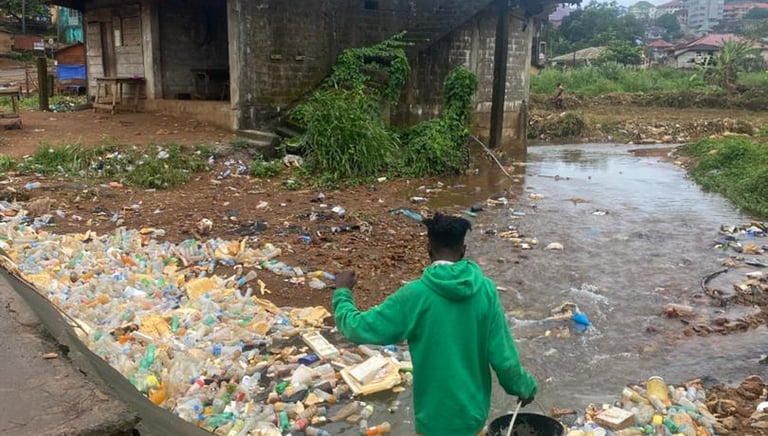
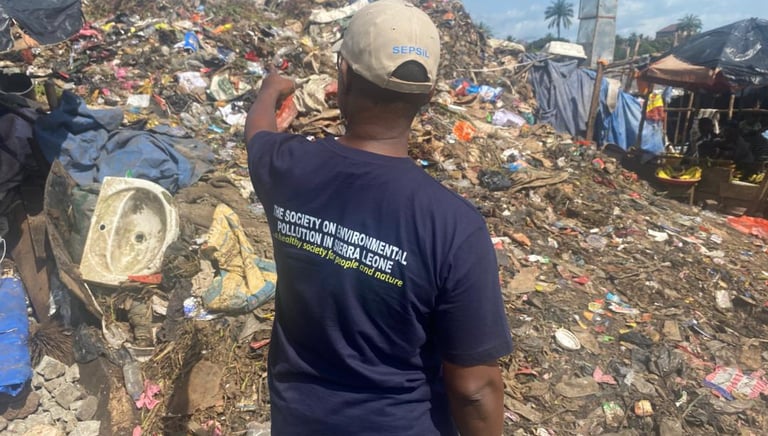
Walking along the streets of whether Freetown or any major provincial city, one would hardly not pass by the unsightly heaps of garbage or clogged waterways, generated and abandoned by households, industries, street traders, or even pedestrians. Waste burning is fast becoming a norm in most neighborhoods without considering the dire health implications that come with it.
This situation is exercebated by insufficient infrastructure, low service coverage of an estimated 40% leaving a large portion of uncollected waste, and poor public attitudes.
The consequences of not doing anything, or too little to combat the problem are dire on the population. There have been increased incidences of flooding and attendant loss of lives and property every year. The cases of infectious diseases emanating from poor waste management and sanitation are terrifying. According to WHO Regional Country Profile, Malaria causes over 38% of hospital consultations with 17.6% of those admitted then (2024) died of the disease in Sierra Leone. Also, a 2024 report entitled, “Burden of Typhoid in Sierra Leone” states that, the disease is endemic in Sierra Leone with more than 10,000 cases per year broadly in the country.
Solving this problem requires a multitude of approaches, including the full involvement of civil society organizations, state institutions like the National Disaster Management Agency, Ministry of Health and Ministry of Local Government and Community Affairs to support the Councils.
In Freetown, the Freetown City Council (FCC) is currently raising public awareness around compliance with its new waste management bylaws, and trying to divide the city into blocks to ease waste collection challenges. But the question remains whether the structures are available and sufficient enough to ensure strict public compliance.
In spite of the fact that the Society on Environmental Pollution - Sierra Leone (SEPSiL) strongly supports FCC’s current campaign, we encourage FCC to open its doors for the involvement of other local structures in a collaborative endeavor towards carving a sustainable solution to the perennial problem of poor waste management in Freetown. The Council alone cannot certainly solve this rather challenging and complex social problem.